
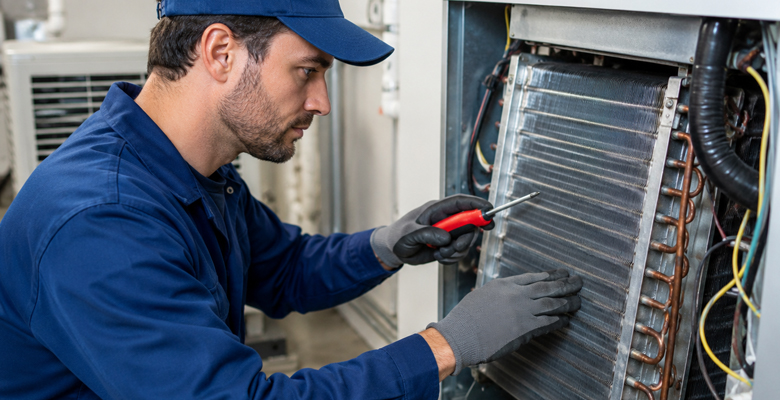
Few things are more frustrating on a hot summer day than discovering your air conditioner is covered in ice. While it may seem strange that an air conditioner can freeze during warm weather, it's actually a common problem that signals something isn't working properly.
A frozen air conditioner isn't just an inconvenience - it can reduce your home's comfort, increase energy bills, and potentially lead to costly repairs if left unchecked. Understanding what causes an AC to freeze can help you take quick action and prevent further damage.
Why Do Air Conditioner Coils Freeze?
Your air conditioner works by absorbing heat from inside your home through the evaporator coil. As warm indoor air passes over the coil, the refrigerant inside absorbs the heat, cooling the air before it's circulated back through your home.
When this heat transfer process is interrupted, the evaporator coil becomes too cold - dropping below 32F (0C). The moisture that naturally condenses on the coil then freezes, creating a layer of ice that continues to grow until the system can no longer operate efficiently.
Common Causes of a Frozen Air Conditioner
1. Restricted Airflow
Poor airflow is one of the most common reasons an air conditioner freezes up. Without enough warm air moving across the evaporator coil, the refrigerant remains too cold and ice begins to form.
Common airflow issues include:
- Dirty or clogged air filters that restrict airflow.
- Closed or blocked supply and return vents.
- Dust and debris covering the evaporator coil, preventing proper heat transfer.
A malfunctioning blower motor or broken fan belt that stops air from circulating through the system.
Regular maintenance and replacing your air filter every one to three months can significantly reduce the risk of airflow-related freezing.
2. Low Refrigerant Levels
Many homeowners assume low refrigerant makes an air conditioner warmer, but the opposite is true.
When refrigerant leaks from the system, pressure inside the evaporator coil drops. Lower pressure causes the remaining refrigerant to expand and become much colder than normal. As humid indoor air contacts the freezing coil, moisture quickly turns to ice.
Unlike replacing an air filter, refrigerant issues require professional diagnosis and repair. Refrigerant doesn't get "used up" - if levels are low, there's almost always a leak that needs to be repaired.
3. Environmental or Equipment Problems
Other factors can also contribute to frozen coils, including:
- Running the air conditioner when outdoor temperatures fall below approximately 60F (15C). A faulty thermostat or temperature sensor that causes the system to run continuously without cycling off.
- Electrical or mechanical problems affecting the compressor or other components.
What Should You Do If Your Air Conditioner Freezes?
If you notice ice forming on your indoor or outdoor unit, take these steps immediately:
1. Turn your air conditioner off at the thermostat. Continuing to operate a frozen system can severely damage the compressor.
2. Switch the thermostat fan setting from AUTO to ON. This circulates room-temperature air over the coil and helps melt the ice safely.
3. Inspect your air filter. If it's dirty or clogged, replace it with a clean one.
4. Allow all of the ice to thaw completely before attempting to restart the system.
When to Call an HVAC Professional
If your air conditioner freezes again after replacing the filter and allowing it to thaw completely, it's time to call a qualified HVAC technician.
Repeated freezing is often a sign of:
- A refrigerant leak
- A failing blower motor
- Dirty evaporator coils
- A faulty thermostat
- Other mechanical issues requiring professional repair
Prompt service can prevent more extensive damage, improve energy efficiency, and help extend the life of your air conditioning system.
Prevent Frozen Air Conditioners with Routine Maintenance
The best way to avoid frozen coils is through regular preventative maintenance. Annual professional inspections, routine filter changes, and keeping vents unobstructed help your air conditioner operate efficiently throughout the cooling season.
If your air conditioner is freezing up or isn't keeping your home comfortable, don't ignore the warning signs. Addressing the issue early can save you from expensive repairs and keep your home cool when you need it most.
Need professional AC service?
Contact our experienced 4 Seasons HVAC team today. We'll diagnose the cause of your frozen air conditioner, make the necessary repairs, and ensure your system is running efficiently all summer long. We are available for emergency bookings 24/7. Call (204) 953-5700 or book online.
We're here when you need us!


